Common access problems for W10 removals on narrow streets
Moving in W10 can be perfectly manageable on paper, then suddenly feel like a puzzle made of parked cars, tight corners, shared entrances, and one van that is just a little too large for comfort. If you are dealing with Common access problems for W10 removals on narrow streets, you are not alone. This is one of those London move-day headaches that sounds simple until the truck arrives and the street seems to shrink by half.
In practice, the challenge is rarely just "the road is narrow". It is usually a mix of access timing, vehicle size, parking constraints, walk distances, stairwells, neighbours, and whether the removal team can work safely without blocking everyone else in the process. This guide breaks down the real issues, what they mean on the ground, and how to plan around them without overcomplicating the day. A bit of forethought goes a long way. Honestly, it saves a lot of stress.
Why Common access problems for W10 removals on narrow streets Matters
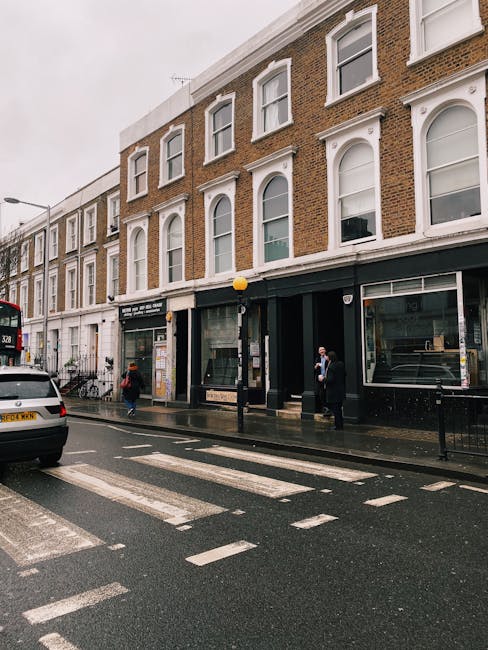
Narrow streets in W10, especially around older terraces, mansion blocks, and converted flats, can create access problems that change the whole shape of a move. A van may not be able to stop directly outside. Two-way traffic can make loading unsafe. A stairwell may be awkward. And if the street gets busy at school run time or early evening, even a well-planned job can turn into a standing traffic jam.
Why does that matter so much? Because access affects almost everything: the time required, the number of staff needed, whether items can be moved safely, and whether extra equipment is necessary. It also affects cost. Not in a dramatic way every time, but enough that unplanned access issues can make a "straightforward" removal feel messy and expensive.
There is also the simple human side. If furniture has to be carried much further than expected, people tire faster and mistakes creep in. That is where scuffs, strained backs, and chipped door frames happen. Not ideal, as you can imagine.
Expert summary: On narrow W10 streets, good removals planning is less about speed and more about controlled movement, safe parking, realistic carry distances, and having a fallback if the ideal parking spot is taken.
For anyone booking a move through local removals or a more specific flat removals service, access checks should be part of the conversation from day one, not something left until the morning of the move.
Table of Contents
- Why Common access problems for W10 removals on narrow streets Matters
- How Common access problems for W10 removals on narrow streets Works
- Key Benefits and Practical Advantages
- Who This Is For and When It Makes Sense
- Step-by-Step Guidance
- Expert Tips for Better Results
- Common Mistakes to Avoid
- Tools, Resources and Recommendations
- Law, Compliance, Standards, or Best Practice
- Options, Methods, or Comparison Table
- Case Study or Real-World Example
- Practical Checklist
- Conclusion
- Frequently Asked Questions
How Common access problems for W10 removals on narrow streets Works
The phrase sounds technical, but the reality is very down to earth. A removal team needs three things to line up: somewhere to park, enough room to unload, and a safe route from the vehicle to the property. On narrow streets, one weak link can slow everything down.
Here is what usually happens on the ground.
- Initial access check: The team asks about the street width, vehicle restrictions, floor level, lifts, and entry points.
- Vehicle matching: A larger luton van, a smaller van, or a combination of vehicles may be chosen depending on the street.
- Parking strategy: The crew looks for the closest legal loading point, not just the closest physical space.
- Carry planning: If the van cannot park outside, the team plans longer carry distances and more trips.
- Protection and timing: Door frames, hallways, and stair rails may need extra care, and loading times may be scheduled around traffic patterns.
This is why a move on a narrow road is not automatically difficult, but it does need a different setup. A small or medium van may be the best fit in one case. In another, a team may use a larger vehicle but arrive at a quieter time of day and work in short, efficient carries. There is no single magic fix.
If the property is a small household move or a student clear-out, services such as small removals or student storage can sometimes reduce the amount of stuff that has to travel in one go. That can be a huge help on a narrow street.
Key Benefits and Practical Advantages
It may sound odd to talk about "benefits" when discussing access problems, but here's the thing: recognising them early gives you control. That is the real advantage.
- Fewer delays: You are less likely to be held up by an unexpected parking problem or blocked entrance.
- Better safety: Shorter, safer lifting routes reduce risk to people and belongings.
- More accurate planning: Teams can choose the right van size, crew size, and schedule.
- Lower stress: Everyone knows what to expect, which calms the day down considerably.
- Reduced damage risk: Less squeezing through tight gaps means fewer knocks to walls, bannisters, and furniture edges.
There is another benefit that is easy to overlook: smoother communication with neighbours and building management. If you know in advance that the vehicle may need a longer loading window or a temporary stopping position, you can give people a sensible heads-up. That tiny bit of courtesy matters on residential streets.
For business moves, it can also support continuity. An office move with awkward access can disrupt staff, deliveries, and IT removal timings. In those cases, office removals paired with office storage may make the transition much cleaner.
Who This Is For and When It Makes Sense
This topic is relevant to far more people than first-time movers. If your postcode area includes older housing stock, tight side roads, or high on-street parking demand, you will probably run into one or more of these issues.
It makes sense to think about access problems if you are:
- moving from a flat on a narrow residential street
- living in a converted building with a shared hallway or side access
- moving office equipment from a busy W10 location
- planning a same-day move with limited parking outside
- trying to move bulky furniture through a small front entrance
- arranging a move for an older relative and want the day to be calm and safe
Families, landlords, tenants, students, small businesses, and even people just moving a few large items can all benefit from planning access properly. If you only need part-load support, man and van can be a sensible option, particularly where streets are too tight for a larger vehicle to sit comfortably for long.
And yes, sometimes the right answer is not "how do we force this move to work?" but "what is the simplest setup for this street?". That is a much better question.
Step-by-Step Guidance
Here is a practical way to approach W10 access planning without getting overwhelmed.
- Measure the basics. Note street width, doorway width, stair turns, lift size, and any obvious obstacles like bollards or recessed entrances.
- Check parking reality, not parking hope. Ask where a van could legally stop, even if it is only for a short loading period.
- List the awkward items. Wardrobes, sofas, beds, American-style fridge freezers, and glass items often need special handling.
- Tell the removal team early. Share details about access, floor level, access codes, and any restrictions that could affect timing.
- Decide whether to split the move. If access is tight, moving some items in advance can reduce pressure on the main day.
- Protect the route. Use covers, matting, and corner protection where needed.
- Leave a buffer. On narrow streets, things rarely run to the minute. A little breathing room helps.
Here is a small but important detail: if the front door opens directly onto a narrow pavement, make sure people can still pass safely while loading. In some streets, that is the difference between a smooth move and a neighbour with a sigh, a coffee, and a very pointed stare.
If you need help preparing items before move day, packing services can make a real difference. A well-packed box is easier to stack, easier to carry, and much less likely to open at the worst moment.
Expert Tips for Better Results
After enough removals, a few patterns become obvious.
- Schedule earlier where possible. Morning moves often face fewer parking pressures than later slots.
- Use smaller consignments for awkward streets. Two well-planned trips can be easier than one overpacked vehicle.
- Label the heavy, fragile, and urgent items clearly. That way the team can load in the right order.
- Keep stairwells clear. Shoes, bikes, prams, and storage boxes become trip hazards fast.
- Measure furniture before moving day. A sofa that "might fit" often doesn't. Or it only fits if you turn it like a chess piece, which is never fun.
- Have a backup plan. If the van cannot stop right outside, know where the nearest workable position is.
One practical trick is to pre-pack the items you know you will need first: kettle, basic toiletries, chargers, a change of clothes, and essential paperwork. When the van is parked a few houses away and the street is busy, you will be glad those things are not buried in a random box labelled "misc".
For households with surplus furniture or a staggered move date, furniture storage or household storage can take pressure off the schedule. That can be especially helpful if access at the destination is tighter than at the current property.
Common Mistakes to Avoid
Most access problems are manageable. The bigger issue is when people assume they will sort themselves out on the day. That is where trouble starts.
- Underestimating carry distance. "Just around the corner" can mean several long trips with heavy items.
- Ignoring parking restrictions. A legal stop matters more than a convenient one.
- Forgetting about stair turns. A landing can be the real blocker, not the front door.
- Not warning about internal obstacles. Tight hallways, low ceilings, and awkward fire doors all slow a move.
- Overpacking boxes. Heavy boxes are harder to carry safely on narrow routes.
- Leaving bins, bikes, or plants in the way. Small clutter becomes a real problem once everyone is carrying something bulky.
- Booking the wrong-sized vehicle. Bigger is not always better on W10 streets.
There is also the temptation to think, "We'll just make it work somehow." To be fair, that mindset has got many people through life. But on move day, "somehow" can become expensive. Better to be precise up front.
If you are moving a home rather than a single item, a full house removals plan usually gives more room to prepare for these problems properly.
Tools, Resources and Recommendations
You do not need a complicated toolkit, but the right basic equipment helps.
| Tool or resource | What it helps with | Why it matters on narrow streets |
|---|---|---|
| Furniture blankets | Protecting doors, banisters, and large items | Prevents damage during tight turns and longer carries |
| Dolly or sack truck | Moving heavy boxes and appliances | Reduces lifting strain when the van cannot park close by |
| Floor protection | Keeping hallways and communal areas clean | Useful in flats and shared entrances where traffic is constant |
| Room-by-room labels | Keeping unloading organised | Speeds up unloading when space outside is limited |
| Short-term storage | Holding items between move dates | Helps when access or timing does not line up neatly |
From a planning point of view, the best resources are often the simple ones: a clear inventory, a floor plan if you have one, and honest notes about the street outside. If access is uncertain, short-term storage can be a practical bridge between properties.
For business clients, especially those moving files or sensitive equipment, document storage and business storage can reduce the volume that needs to pass through a difficult street at once.
Law, Compliance, Standards, or Best Practice
In the UK, removals on narrow streets need to be handled with ordinary care, good driving judgement, and respect for local parking and access rules. Exact requirements can vary by borough and location, so it is wise to check local restrictions before the day rather than assume a loading arrangement will be fine. That part is easy to overlook when everyone is focused on boxes and keys.
Best practice usually means:
- parking legally and safely
- keeping pavements and entrances as clear as possible
- using suitable lifting techniques and equipment
- protecting communal areas and the property fabric
- communicating access limitations clearly in advance
If you are using a professional team, it is sensible to check their approach to health and safety policy and insurance and safety. That is not just box-ticking. It tells you they think about risk in a practical way, especially when access is tight and the stakes are higher.
For any move involving valuables or fragile items, careful packing and clear responsibility boundaries matter too. Read the terms, ask the awkward questions, and do not be shy about it. That is what sensible customers do.
Options, Methods, or Comparison Table
When access is difficult, there is usually more than one way to handle the move. The best option depends on how narrow the street is, how much you are moving, and whether the property is a flat, house, or office.
| Method | Best for | Pros | Trade-offs |
|---|---|---|---|
| Full removals team | Larger home moves with more furniture | Efficient, structured, less personal lifting | Needs good access planning and may cost more |
| Man and van | Smaller moves or flexible loading | Agile on narrow roads, often easier to position | May require more trips for bigger moves |
| Small removals | Single rooms, studios, or a few bulky items | Lower volume, simpler logistics | Not ideal for full-house content |
| Removals plus storage | Staggered move dates or access uncertainty | Flexible, reduces time pressure | Requires extra planning and storage cost |
For many W10 streets, the smart answer is a mix: a smaller vehicle, a well-organised packing plan, and storage support if needed. That is often more effective than trying to do everything in one frantic push.
If you need both transport and a holding solution, removals and storage can make life noticeably easier. It gives you a bit of breathing space, which, truth be told, is often what a narrow-street move really needs.
Case Study or Real-World Example
Picture a typical W10 flat move on a weekday morning. The property is on a narrow residential road with cars parked tightly on both sides. The entrance is shared, the stairs are steep, and the furniture includes a bed frame, a sofa, two wardrobes, and several heavy boxes.
The first plan was to use a larger van and park right outside. That did not happen. The street had too little space, and the nearest sensible stopping point was a short walk away. Instead of forcing the original plan, the team adjusted quickly: smaller items were loaded first, heavier items were broken down where possible, and the route through the entrance was kept clear. The move took longer than ideal, but it stayed controlled and safe.
What made the difference? Three things: realistic expectations, clear communication, and not pretending the street was wider than it was. Simple, really. But simple is often the part people miss.
In another move, a family used mobile self storage to remove part of the load before move day. That reduced pressure on the street, shortened the loading time, and made the final handover far calmer. It was one of those situations where the "extra step" actually made the whole thing easier.
Practical Checklist
Use this before a W10 move on a narrow street.
- Confirm the exact address and entrance location
- Check whether the street allows loading nearby
- Measure doorways, stair turns, and lift dimensions
- List bulky, fragile, or awkward items separately
- Tell the removal team about parking limits and access codes
- Decide if a smaller vehicle would actually be better
- Protect walls, bannisters, and floors in advance
- Clear the hall, path, and doorway before the crew arrives
- Prepare essentials you will need immediately after arrival
- Have a backup plan for parking or short-term storage if needed
This is also a good moment to check the commercial basics. If you have not yet compared options, pricing and quotes can help you weigh up what is worth paying for and what is not.
And if you want a clearer idea of the company behind the service before booking, you can also read about us. Small trust signals matter when you are letting a crew handle your home or business possessions.
Get a free quote today and see how much you can save.
Conclusion
The main thing to remember is that common access problems for W10 removals on narrow streets are not unusual, and they are rarely unsolvable. They just need a calmer, more realistic approach than a typical move on a broad suburban road. Once you account for parking, carry distance, street width, and the shape of the building itself, everything becomes much easier to manage.
Whether you are moving a flat, a whole house, or a few awkward pieces, the best results usually come from early planning, honest communication, and a willingness to choose the simpler option when the street demands it. That is not a compromise. It is just good judgement.
And if you are feeling a bit daunted by the logistics, that is fair enough. Narrow streets can test anyone. But with the right preparation, the whole thing can still go smoothly. Calmly, even. Which is nice for a change.
Frequently Asked Questions
What are the most common access problems for W10 removals on narrow streets?
The biggest issues are restricted parking, limited turning space, long carry distances, tight stairwells, shared entrances, and vehicles that are too large for the street layout. Sometimes it is the combination that causes the real problem, not one single obstacle.
Do I need a smaller van for a narrow street move?
Not always, but a smaller van is often easier to position and unload safely on narrow W10 streets. The right vehicle depends on the quantity of items, the street width, and whether there is a legal loading space nearby.
How far in advance should I mention access problems to a removals team?
As early as possible. Ideally, share access details when you first ask for a quote. That gives the team time to plan vehicle size, crew numbers, and timing properly instead of improvising on the day.
What if the van cannot park directly outside my property?
That happens quite often in London. A good team will plan a safe carry route from the nearest workable stopping point. The move may take longer, but it can still be done efficiently if everyone knows the situation in advance.
Are narrow street moves more expensive?
They can be, because they may take longer and require extra labour or a different vehicle setup. That said, the final cost depends on many factors, so the most reliable approach is to request a tailored quote rather than assume.
How do I know if my stairs or hallway are too tight for furniture?
Measure the tightest turns, landings, and doorways, then compare them to the furniture dimensions after any dismantling. If something looks close, it probably is close. That is usually the moment to plan a different route or break the item down further.
Can storage help if access is difficult on move day?
Yes. Storage can reduce the amount of furniture and boxes that need to move at once, which is very useful when street access is awkward. Options like secure storage or long-term storage may be useful if your move dates do not line up neatly.
What should I tell the removal company about my street?
Share parking restrictions, one-way access, pavement width, shared entrances, floor level, lift size, and any time restrictions. Even little details like bollards, steps, or a very narrow front path can make a real difference to planning.
Is it better to move early in the morning on a narrow street?
Often yes, because roads tend to be quieter and parking is usually less competitive. It is not a guarantee, but early slots can make access a little easier and reduce the chance of being blocked by other vehicles.
What can I do to make loading safer on a tight road?
Keep the path clear, pack boxes securely, protect door frames, and avoid blocking the pavement longer than needed. Good communication and a tidy route go a long way. It sounds obvious, but that is usually where the best moves start.
Are office moves on narrow streets handled differently from house moves?
Yes, usually. Office removals often involve more equipment, tighter timing, and greater attention to document handling, IT items, and business continuity. In some cases, office storage can help stagger the move and keep disruption under control.
Where can I get help if I am not sure what service I need?
If the move sounds complicated, start by describing the property type, access issues, and volume of items. From there, a suitable service can usually be recommended. For straightforward advice and next steps, you can also use the main contact us page.